

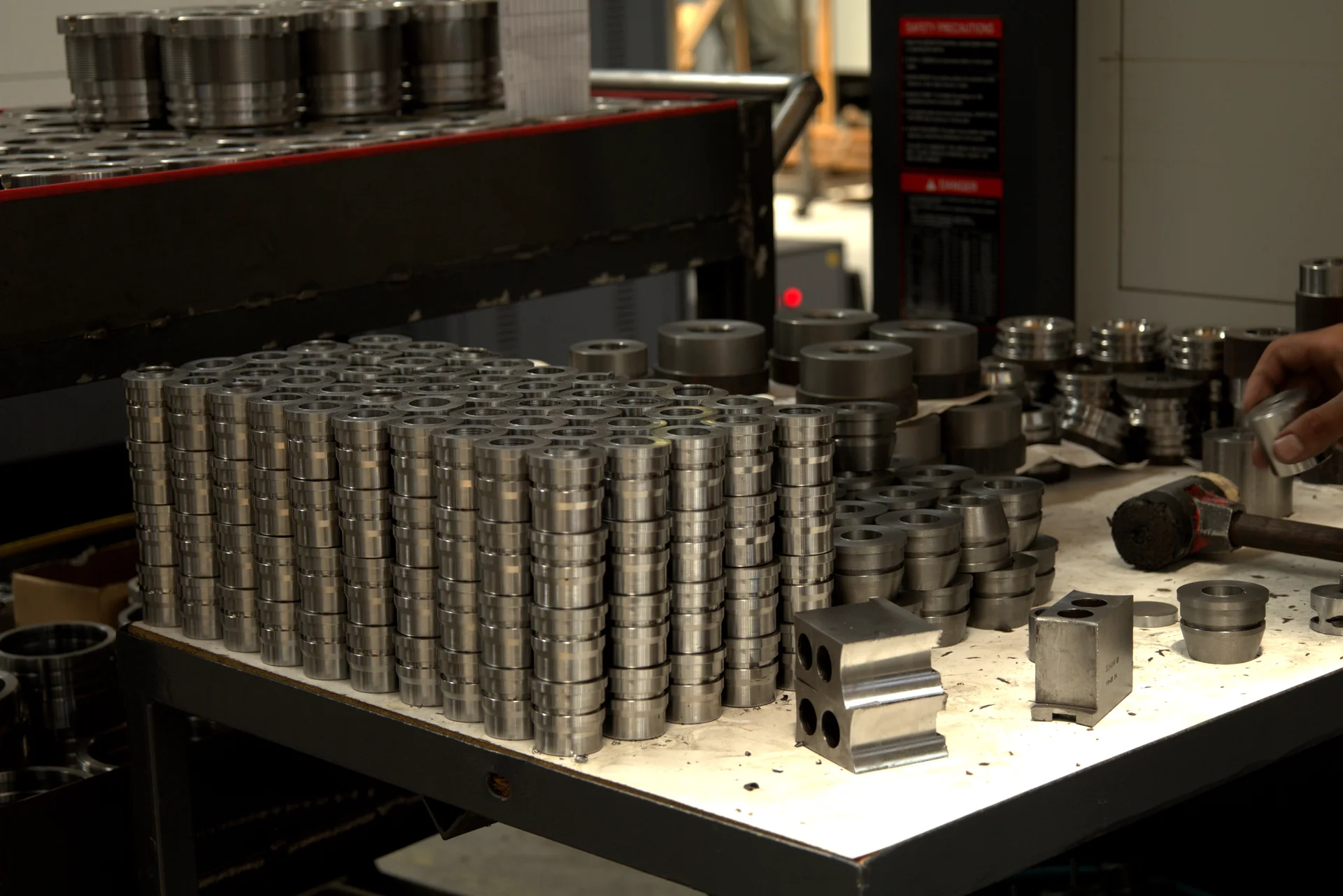
Body (Barrel)
Main pressure chamber. Holds the piston inside; its inner diameter is precision honed for sealing (cross-hatch pattern, oil retention + lip friction).
The 9 main components of a hydraulic cylinder: the function of each, material spec and in-house manufacturing status at HPS. You can request a detailed sectional drawing and technical file from the engineering team.
Rotate with the mouse, click the red dots: the material spec and function of each component appears.
Main pressure chamber. Holds the piston inside; its inner diameter is precision honed for sealing (cross-hatch pattern, oil retention + lip friction).
Divides the inside of the body into two pressure chambers. Under hydraulic pressure in one direction, it transfers load to the other side.
Force-transmission rod extending out from the piston. Its outer surface is hard chrome plated (corrosion + friction + sealing).
The cover on the rod side of the cylinder. Guides the rod outward and houses the rod seal + wiper.
The cover on the non-rod side of the body. Holds the pressure in the non-rod chamber.
Piston seal (internal division), rod seal (rod exit), wear ring (load support), wiper (dust scraper), scraper. Selected according to the application.
Piston and rod support bearings. Prevent metal-to-metal friction under lateral force.
Applies a hydraulic brake to the piston at the end of the stroke. A small fluid volume is compressed, the piston slows down, impact and wear are reduced.
Threaded holes for the inlet/outlet of the hydraulic fluid. BSP, NPT, ORB, metric. Standard according to the application.
For a full sectional drawing, material certificate and custom application combinations, submit a request to the engineering team.
Component-based material certificates, sectional drawings and custom combination spec files are shared by engineering on a project basis.
Request form