

HPS
Home/Technical Resources/Seal Selection
Sealing

Seal selection guide

Seal kit selection for a hydraulic cylinder depends on the operating pressure, temperature range, fluid type and wear profile. The wrong choice means early leakage + complete cylinder replacement. HPS provides application-based seal kit recommendations.

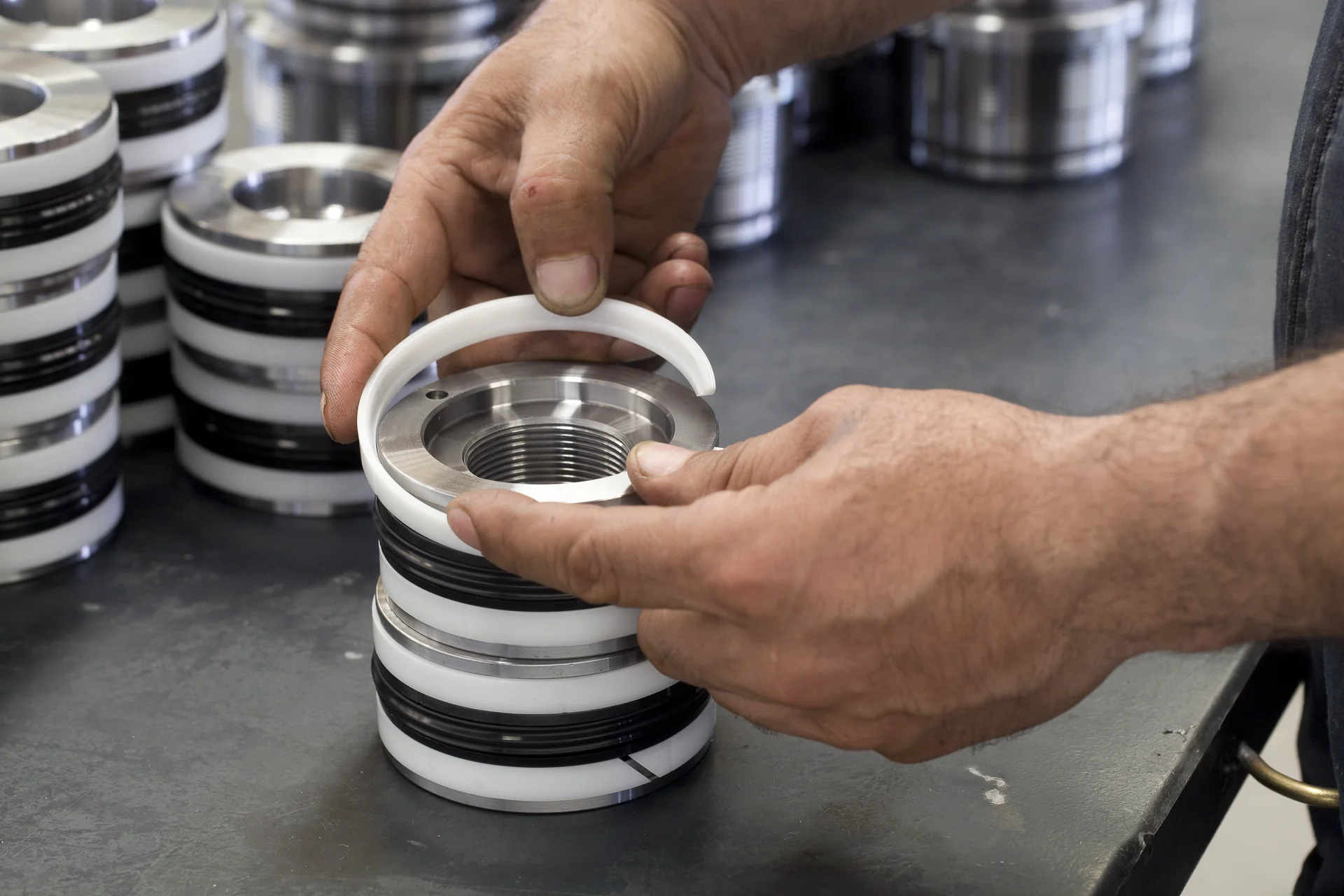
Seal kit assembly: piston seal stack close-up
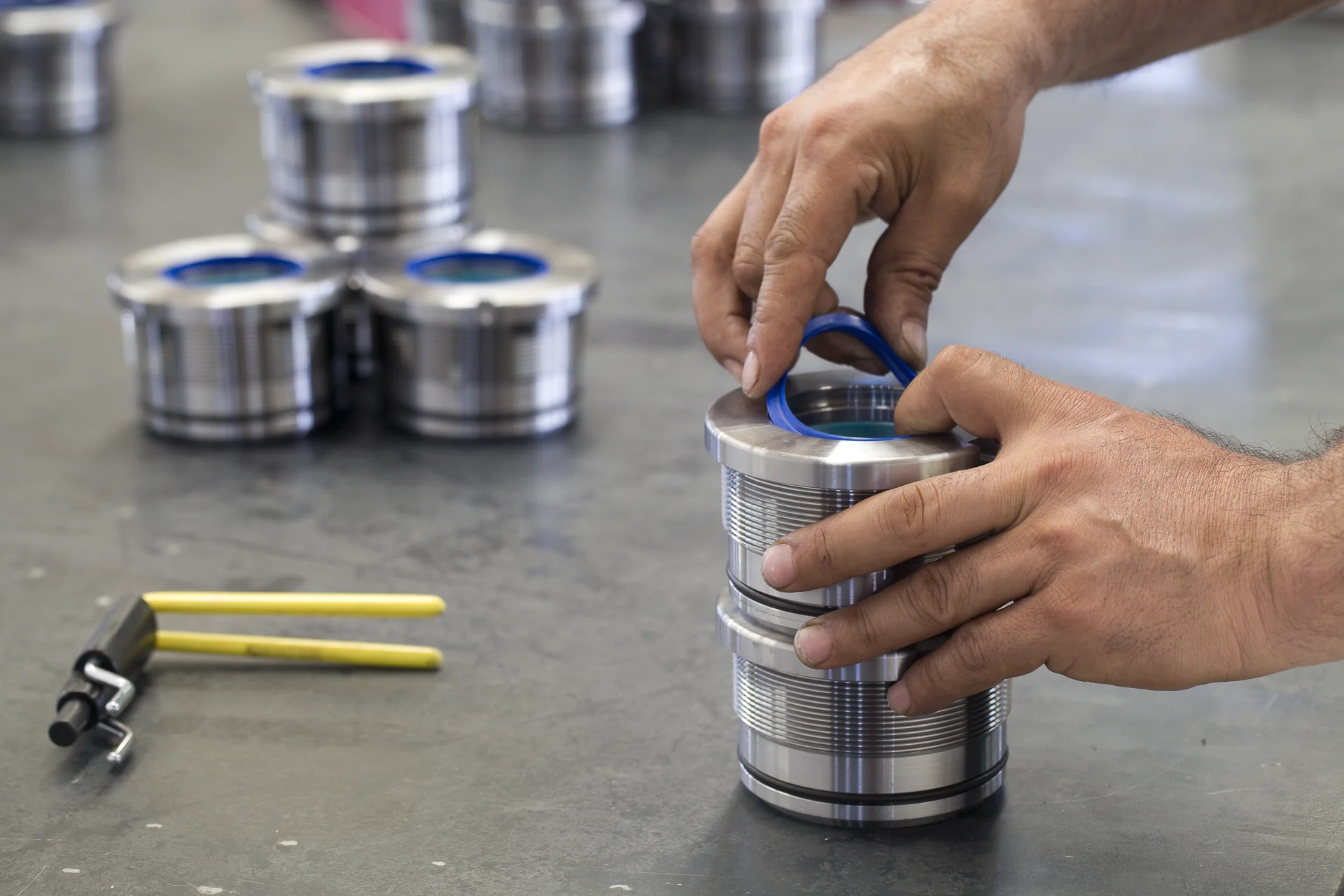
Gland bushing + blue PU seal
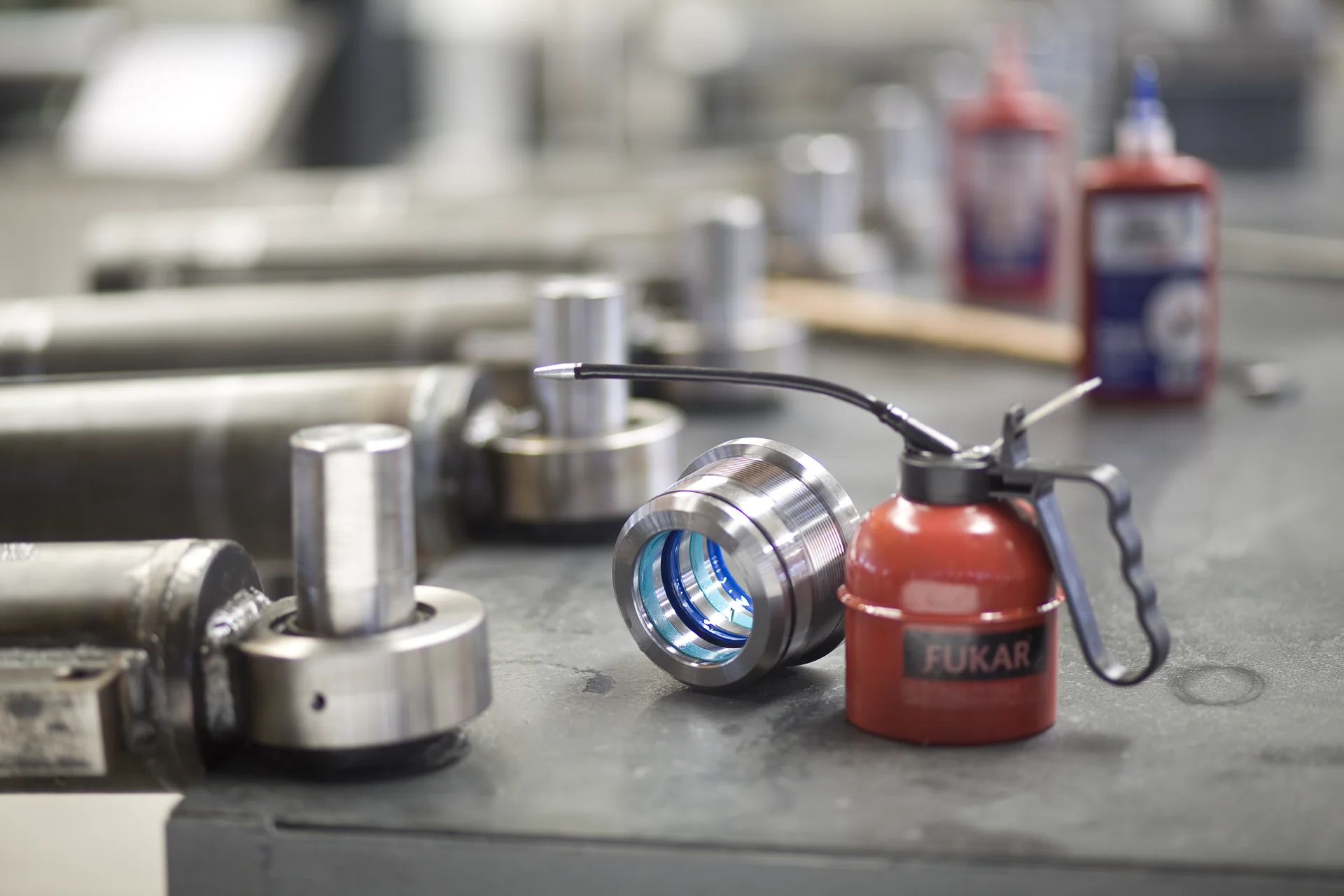
Cylinder component + assembly lubricant
Quick material finder
NBRSuitable
NBR (Nitrile)
≤ 250 bar · -30°C / +90°C
HNBRSuitable
HNBR (Hydrogenated Nitrile)
≤ 300 bar · -30°C / +120°C
PUSuitable
Polyurethane (PU)
≥ 400 bar · -30°C / +100°C
FKMSuitable
FKM (Viton)
Yüksek (uygulama bağımlı) · -20°C / +200°C
PTFESuitable
PTFE (Teflon)
Yüksek (uygulamaya göre) · -50°C / +250°C
CeramicSuitable
Ceramic (Polymer Composite)
700+ bar · -30°C / +150°C

Enter values: suitable seal materials are marked green. Final selection is verified by engineering per application.

Material matrix

6 seal materials: pressure, temperature, application

NBR (Nitrile)

NBR
Acrylonitrile Butadiene Rubber
Pressure≤ 250 bar
Temperature-30°C / +90°C

General hydraulics, mineral oil applications: standard choice

Advantage
Economical, broad oil compatibility, good wear resistance
Limitation
Limited high-temperature + ozone resistance

HNBR (Hydrogenated Nitrile)

HNBR
Hydrogenated Acrylonitrile Butadiene Rubber
Pressure≤ 300 bar
Temperature-30°C / +120°C

Improved NBR: applications requiring bio-oil, heat resistance

Advantage
Better heat + ozone resistance than NBR, bio-oil compatible
Limitation
More expensive than NBR

Polyurethane (PU)

PU
Polyurethane Elastomer
Pressure≥ 400 bar
Temperature-30°C / +100°C

Heavy-duty: high pressure, abrasive operating conditions (mining, construction)

Advantage
High pressure resistance, excellent wear resistance, low crack growth
Limitation
Hydrolysis risk at high temperature, limited in water-based fluids

FKM (Viton)

FKM
Fluoroelastomer (Viton®)
PressureHigh (application-dependent)
Temperature-20°C / +200°C

Applications requiring high temperature + chemical resistance: phosphate ester oils, aggressive environments

Advantage
Superior heat + chemical resistance, durable in aggressive fluids
Limitation
Expensive, hardens at low temperature

PTFE (Teflon)

PTFE
Polytetrafluoroethylene
PressureHigh (per application)
Temperature-50°C / +250°C

Extreme temperature + chemical environment: composite seal component (glass/carbon/polymer-filled; bronze filling is more common in wear rings)

Advantage
Excellent chemical resistance, widest temperature range, very low friction
Limitation
Low elasticity / poor rubber memory, cold flow (creep) under load; cannot seal dynamically on its own, used as a composite with an NBR/PU energizer

Ceramic (Polymer Composite)

Ceramic
Polymer-Ceramic Composite
Pressure700+ bar
Temperature-30°C / +150°C

Very high pressure niche applications: presses, heavy industry

Advantage
Extreme pressure resistance, superior extrusion resistance
Limitation
Very expensive, only for specific applications
Seal kit

Typical seal kit components

A hydraulic cylinder seal kit consists of multiple components: each is positioned in a different location and performs a different function. It is sold as a complete kit (piston seal + rod seal + wear ring + wiper + scraper combination).

PS
Piston Seal
Location
Piston outer circumference, barrel inner diameter
Function
Sealing between the two pressure chambers in a double-acting cylinder
Typical material
PU / NBR + PTFE composite
RS
Rod Seal
Location
Head inner, rod outer surface
Function
Sealing from the high-pressure side to the external environment
Typical material
PU / NBR + PTFE composite
WR
Wear Ring
Location
Piston + head (rod support)
Function
Carries side load (lateral force), prevents metal-to-metal friction
Typical material
PTFE-bronze / composite
WP
Wiper
Location
Head outer side, at the rod exit
Function
Dust, dirt, moisture wiper: prevents contamination of the rod from outside in
Typical material
PU / NBR
SC
Scraper (Heavy-Duty Wiper)
Location
On the outer side of the wiper
Function
Ağır kir/buz/çamur sıyırıcı. İnşaat, madencilik için ek koruma
Typical material
PU + metal carrier
BR
Buffer Ring
Location
Behind the rod seal (high-pressure side)
Function
Dampens pressure spikes, extends the rod seal service life
Typical material
PU / FKM

A typical seal kit contains 5-6 components. In heavy-duty applications, a scraper + buffer ring is added. A PTFE-bronze wear ring is mandatory for static load + side force.

Selection rule

Practical selection rules

Standard hydraulic: < 200 bar, < 80°C

NBR piston + rod seal · PTFE-bronze wear ring · NBR wiper. Most economical choice, broad oil compatibility.

Heavy-duty: > 250 bar or abrasive

PU piston + rod seal · PTFE-bronze wear ring · PU wiper + scraper. High pressure + wear resistance.

High temperature: > 100°C

HNBR or FKM (Viton) seal · PTFE-bronze wear ring · FKM wiper. Ozone + heat resistance.

Very high pressure: > 500 bar

Ceramic (polymer composite) piston seal · PU + buffer ring rod seal · PTFE wear ring. Press and hydraulic impact applications.

Brand preference free

Assembly with the requested seal brand

The seal kit choice is entirely at the customer's initiative; the customer's preferred brand is sourced and used. Assembly follows HPS's recommendation or the customer's own specification.

Seal kit recommendation

Tell us your application: operating pressure, temperature, fluid type, cycle count. HPS engineering provides a seal kit recommendation.

Request form